




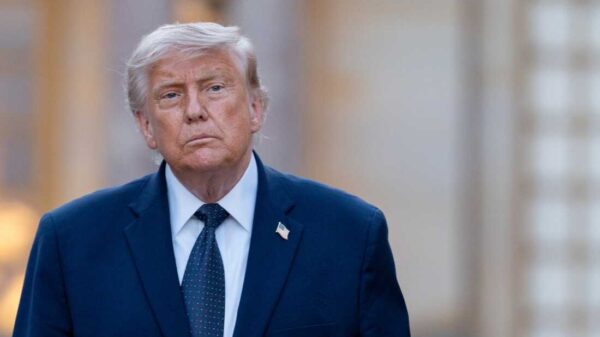





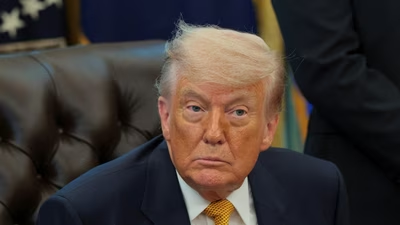



President Donald Trump has announced a new and sweeping trade agreement with Japan.
The announcement came Tuesday night during a reception with Republican members of Congress.
“I just signed the largest trade deal in history; I think maybe the largest deal in history with Japan,” Trump said.
He emphasized the effort behind the deal, calling it “a great deal for everybody.”
Key Highlights of the Deal
Under the agreement, U.S. importers will now pay a 15% reciprocal tariff on Japanese goods.
This rate also applies to automobiles and car parts — a major advantage for Japan, which previously faced a 25% tariff on vehicle exports since April.
In return, Japan has agreed to invest $550 billion into the U.S. economy.
Trump claimed the U.S. would receive 90% of the profits from this investment.
Economic Impact
“This Deal will create Hundreds of Thousands of Jobs,” Trump posted on Truth Social.
He said Japan will now open its markets to U.S. cars, trucks, rice, and agricultural products.
Following the announcement, Japanese markets surged.
The Nikkei index rose by 3.7%, boosted by automaker shares hitting a one-year high.
Japan’s Response
Japanese negotiator Ryosei Akazawa called the deal a breakthrough.
“Mission accomplished,” he posted on X, sharing a photo of himself in the White House.
He said Japan is now the first country allowed to reduce auto tariffs without volume restrictions.
In Tokyo, Prime Minister Shigeru Ishiba said the agreement reflected Japan’s lowest-ever trade surplus figure with the U.S.
He promised a detailed review of the agreement’s terms.
Breakdown of Japan’s Investment
Akazawa clarified that the $550 billion investment would come through equity and loans.
It will support Japanese businesses in sectors like pharmaceuticals and semiconductors.
He also said U.S. rice imports may increase under the deal but assured it wouldn’t compromise Japanese agriculture.
Further talks on steel and aluminum tariffs, still at 50%, will continue.
Third Major Trade Announcement in a Day
This Japan agreement was the third trade update Trump made on Tuesday.
Negotiations with the EU, South Korea, and India have stalled, with an August 1 tariff deadline looming.
Talks with Japan were previously described as tense.
“They’re tough. The Japanese are tough,” Trump said in June aboard Air Force One.
But on Tuesday, Trump said this was a “very exciting time” for both nations.
Contentious Issues: Rice and Cars
Trump has repeatedly criticized Japan for blocking U.S. rice exports.
“They won’t take our RICE, and yet they have a massive rice shortage,” he posted on Truth Social.
In 2023, Japan imported $298 million worth of American rice.
Between January and April this year, that figure stood at $114 million.
However, a 2021 U.S. Trade Representative report under President Biden noted Japan’s import system limits U.S. rice access.
Cars have also been a sticking point.
Trump claimed Japan barely imports U.S. vehicles.
“We didn’t give them one car in 10 years,” he said earlier this month.
In reality, Japan imported 16,707 U.S. vehicles last year.
Signs of Progress
Negotiation tensions eased recently after U.S. Treasury Secretary Scott Bessent met with Ishiba in Tokyo.
“A good deal is more important than a rushed deal,” Bessent wrote on X.
Mary Lovely from the Peterson Institute said the agreement reduces tariff threats and offers a potential advantage over other suppliers.
She added that the U.S. may still not sell many vehicles in Japan, but agricultural liberalization could benefit Japanese consumers.
Japan’s Importance as a Trade Partner
Japan is the U.S.’s fifth-largest source of imports.
In 2023, it sent $148 billion worth of goods to the U.S., mainly cars, machinery, and car parts.
Goods from Japan briefly faced a 24% tariff before Trump paused the increase in April.
That rate has since been lowered to a 10% minimum.
Meanwhile, the U.S. exported $80 billion worth of goods to Japan last year, mostly in oil, gas, pharmaceuticals, and aerospace.
Future Plans and Political Dynamics
Trump also said the two countries are close to a joint gas pipeline project in Alaska.
He noted interest from several Asian allies, including Japan, South Korea, and Taiwan.
Japan, which trades most with China, faces pressure from the U.S. to reduce those ties.
The current agreement builds on the 2019 expanded trade deal between the two countries.
Japan holds leverage as America’s biggest foreign creditor, owning $1.1 trillion in U.S. Treasury securities.
Final Thoughts
This new trade deal marks a significant development in U.S.–Japan relations.
It brings major benefits for both economies, although details and implementation will be closely watched.
Japan and the U.S. remain committed to cooperation on trade, innovation, and future investments.