Let me guess. You are absolutely shocked that Donald Trump’s Justice Department is missing some crucial paperwork.
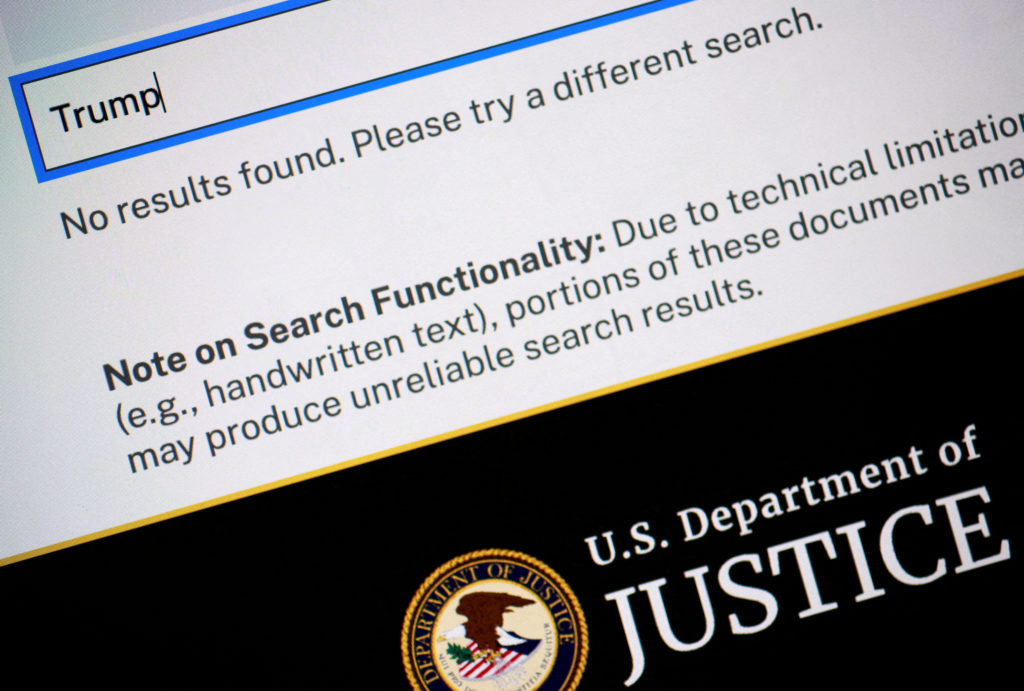
According to a new report from NPR, at least 53 pages of FBI interview summaries and notes have mysteriously vanished from the public Epstein files database.
Yes, you heard that right.
Congress ordered the release of these files, and the DOJ controls the entire archive.
Yet reporters comparing internal catalog numbers to the public postings found glaring gaps.
And what do those missing materials just so happen to relate to?
Oh, just allegations involving President Donald Trump.
MAGA Math Does Not Add Up
NPR reports that the Justice Department completely declined to explain the discrepancies between their logs and what is online.
This is the exact same massive release process that has been an absolute trainwreck from day one.
Victim names were exposed and then corrected.
Documents were pulled down and then slapped right back online.
They blamed privacy reviews.
They blamed deadlines.
Now the public learns that dozens of pages reflected in official logs are simply not available for review.
Is it a strategic right wing coverup, or is it just the standard incompetence we have come to expect from the MAGA crew?
Honestly, both options produce the same terrifying result.
Foxes Guarding the Henhouse
Let us look at who is actually running this show.
This is very clearly Donald Trump’s Justice Department.
Attorney General Pam Bondi and Deputy Attorney General Todd Blanche serve entirely at his pleasure.
These are incredibly loyal officials overseeing a release process that now appears to shield him from clarity.
Bondi and Blanche have insisted that nothing was withheld for political sensitivity.
Sure, Pam.
That categorical statement sits very uneasily beside a document trail that outside reporters say does not match the public archive.
Chaos as a MAGA Shield
The allegations in these files are incredibly grave and involve claims of sexual abuse of minors.
While these claims remain unproven, FBI case files contain interviews and leads that do not automatically translate into charges.
That distinction matters, and it makes the integrity of the release process more important, not less.
Disorder produces the exact same practical result as absolute concealment.
The public cannot tell what is complete, what is withheld, and why.
Accountability just drifts away into the ether.
An intentional coverup implies discipline and coordination, which honestly might be giving this DOJ way too much credit.
What this episode actually suggests is a department executing a historic disclosure so unevenly that it totally undermines its own credibility.
The Truth Remains Out of Reach
Fifty three pages is not just some liberal talking point.
According to the NPR report, it is a hard number drawn directly from the department’s very own paper trail.
Either these pages fall within the scope of the transparency law, or they do not.
Either they are being withheld under a specific statutory exemption, or they are missing because the department has no control over its own rollout.
The public deserves to know exactly where those pages are and under what authority they are being kept from view.
Until the DOJ provides a clear, documented reconciliation of the record, the distinction between chaos and concealment is purely academic.
When the mechanics of transparency break down, the effect is always the exact same.
The truth stays completely out of reach.