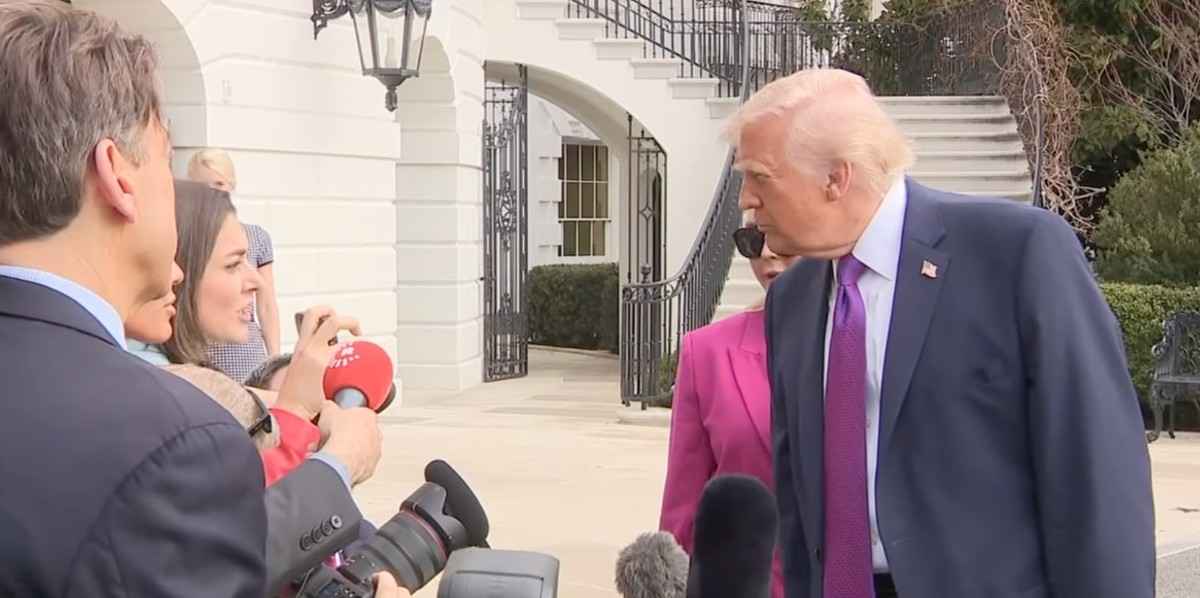
President Donald Trump was visibly caught off guard on Wednesday when reporters cornered him outside the White House over a military investigation confirming that U.S. forces were responsible for striking a school in Minab, Iran, a devastating incident that has sent shockwaves through the ongoing military campaign against Tehran.
The exchange drew immediate widespread attention as Trump, who has projected unwavering confidence throughout the operation, appeared blindsided by the findings and offered a response that many found deeply troubling given the scale of the incident.
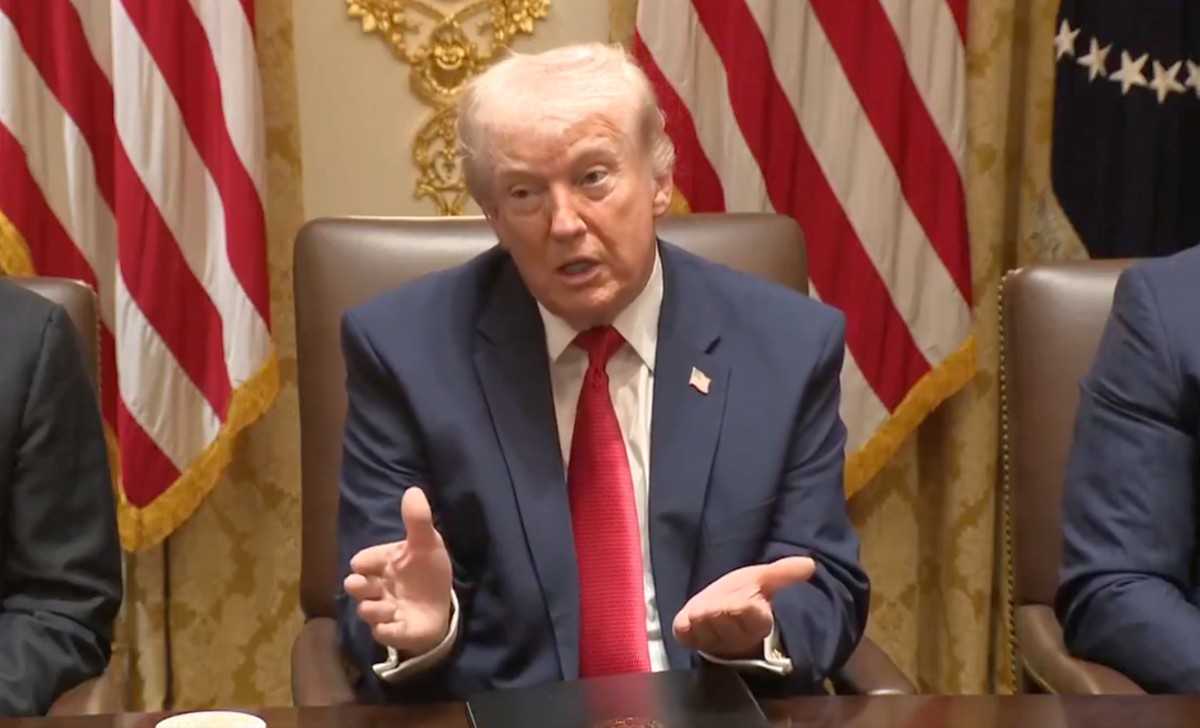
Standing outside the White House on what he called “Day 11” of the military campaign, Trump opened his remarks with characteristic bravado, telling reporters that the U.S. military was “the best” and “the most powerful in the world” and that forces were “hitting them very hard.”
The upbeat tone collapsed almost immediately when a reporter stepped forward and informed the president directly that a formal military investigation had concluded U.S. forces were responsible for the school strike.
“A new report says that the military investigation has found that the United States struck the school in Iran,” the reporter stated, before asking whether Trump accepted responsibility as Commander in Chief.
Trump responded with apparent confusion, asking “That is what?” before the reporter repeated the question a second time.
His final answer was three words: “I don’t know about it.”
The dismissive response drew sharp backlash almost instantly, particularly given that just one day earlier, on Tuesday, White House press secretary Karoline Leavitt had told reporters that Trump would accept the findings of the investigation, making the president’s sudden claimed ignorance on Wednesday all the more striking.
Trump had also previously gone on record blaming Iran for the school strike, a claim now directly contradicted by his own military’s investigation.
According to people briefed on the preliminary findings, the school in Minab sits on the same block as buildings used by Iran’s Islamic Revolutionary Guards Navy, one of the top targets of the U.S. military campaign.
The site was originally part of the naval base, but satellite imagery reviewed by The New York Times showed the building had been fenced off from the military compound sometime between 2013 and 2016, with watchtowers removed, three public entrances opened, play areas and a sports field painted on asphalt, and the walls painted blue and pink.
Despite these visible changes, the Defense Intelligence Agency’s “target coding” still labeled the school building as a military target when the data was passed to Central Command, the military headquarters overseeing the war.
Investigators are still working to understand how the outdated data was transmitted to Central Command and whether the Defense Intelligence Agency had updated information that was simply never passed along.
The National Geospatial-Intelligence Agency, which provides and analyzes satellite imagery of potential targets, is also under scrutiny, as intelligence officers are expected to use updated imagery to verify targeting data before strikes are authorized.
Officials conducting the investigation have also examined whether artificial intelligence models or other technical intelligence-gathering tools contributed to the mistaken targeting, though officials said the error was unlikely to have been caused by new technology.
Instead, investigators believe it likely reflected a common but sometimes devastating human error in wartime, one rooted in poor database maintenance and a failure to verify outdated intelligence before ordering a strike.
A verified video published by Iran’s semiofficial Mehr News Agency showed a Tomahawk cruise missile striking the naval base beside the school in Minab on February 28, and a Times visual investigation confirmed the school building was severely damaged in a precision strike that occurred around the same time as attacks on the base.
The incident has drawn uncomfortable comparisons to one of the most notorious intelligence failures in recent American history.
In 1999, during the Kosovo war, the CIA provided erroneous targeting data based on old, outdated maps, leading U.S. forces to bomb the Chinese Embassy in Belgrade, killing three Chinese citizens.
The CIA had wrongly assessed the building was the headquarters of a Yugoslav arms agency, and just as in the current case, military planners assumed the intelligence agency had verified the site before ordering the strike.
CIA Director George Tenet told a congressional committee that year that database maintenance was “one of the basic elements of our intelligence effort” but had “suffered in recent years” as the workforce was stretched thin.
More than two decades later, investigators are confronting what appears to be a strikingly similar breakdown, raising urgent questions about whether the lessons of Belgrade were ever truly absorbed.
As calls grow louder for full transparency and accountability, the White House has yet to issue any formal statement addressing the investigation’s conclusions or explaining the gap between Leavitt’s Tuesday assurances and Trump’s dismissive three-word answer the following day.