














Vice President JD Vance on Wednesday blamed former President Barack Obama for a munitions crisis in Iowa, after a reporter asked why the Trump administration had waited until November to destroy a deteriorating stockpile of explosives.
Critics quickly pushed back, noting that President Donald Trump has occupied the White House for six of the last 10 years.
The remarks, reported by Mediaite and The Hill, came hours after the U.S. Army carried out a controlled detonation of degraded lead azide at the Iowa Army Ammunition Plant in Middletown.
Vance spoke to reporters at Wright-Patterson Air Force Base in Ohio, where he and second lady Usha Vance were visiting troops for Thanksgiving. PBS NewsHour posted video of the exchange:
Vance’s account
Asked whether the Army had given Iowans enough notice, and whether officials had done enough to pursue neutralizing the material instead of blowing it up, Vance said the administration had been “obsessed with this particular question” in the days before the blast.
“The can had been kicked down the road. If you go back to 2009 under the Obama administration, we stored this highly unstable stuff with no real plan for how to move it, with no real plan for how to neutralize it,” Vance said, according to The Hill.
He added, “When I say we, I mean the Obama administration, the United States government did this back in 2009.”
Vance said the Trump administration became aware “about six months ago” that “it was impossible to move it” and “impossible to effectively neutralize it without causing significant danger to the surrounding communities.” Officials, he said, were left with two options: a controlled detonation, or “to just let it sit there.”
“Every scientist, every expert that we talked to, said that if you let it sit there, there’s a very good chance, whether it’s tomorrow, a week from now, a month from now, but very soon there is a very good chance that with the cold weather this stuff is going to detonate on its own,” Vance said. An uncontrolled blast, he added, was what “really worried” the administration.
When a reporter noted that the Army had flagged the problem in March and asked why it had taken until November to detonate the material, Vance pointed to site preparation, attempts at neutralization, and the need to plan around weather patterns “to make sure that you have as limited of an impact as possible.” He then returned to his earlier argument: “Fundamentally, we were trying to deal with a problem that the Obama administration had kicked to us. There was no plan to solve this. We ultimately had to solve it.”
The detonation in Middletown
Lead azide is a highly sensitive primary explosive used to ignite munitions. In an announcement the day before the blast, the Army said a routine safety inspection had found that approximately 68 drums, more than 9,700 pounds net explosive weight, or about 5 tons of stored lead azide inside earth-covered magazines had severely degraded and crystallized. In that state, officials said, the material is vulnerable to friction, vibration, heat, or shock, making it too dangerous to move, open, or chemically treat.
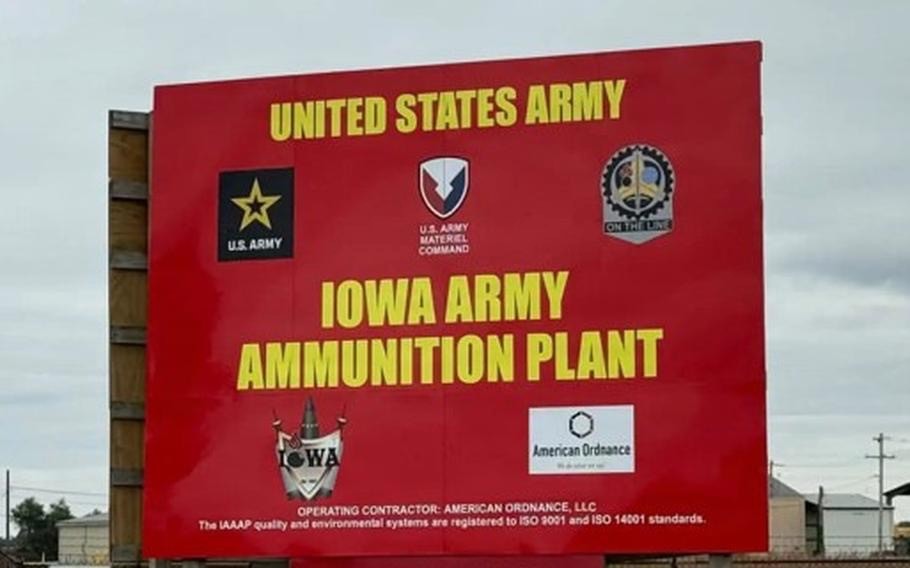
The Army officially notified the Environmental Protection Agency of the unstable chemicals in March, CBS News reported. Residents and environmental groups raised concerns about lead exposure in surrounding communities, particularly for children.
A federal appeals court on Monday cleared the way for the operation after legal challenges, and the Army proceeded with the blast on Wednesday, Nov. 25, at about 9 a.m. Central time. The date had been changed three times, the Associated Press reported, amid public backlash and to allow more time for safety measures and favorable wind.
Out of caution, officials recommended that residents of Middletown and nearby areas within a five-mile zone southwest of the plant relocate before the blast. The Army said it used earthen barriers, foam, and water to absorb the explosion and trap debris.
Afterward, federal officials described the detonation as a success. The EPA reported that air monitors detected no lead in the air around the plant in the first hours after the blast, CBS News reported, citing readings 15 minutes after the detonation and again two hours later.
Maj. Gen. Eric Shirley, who led the operation for the Army, said the barrels had been destroyed with no secondary explosions and no infrastructure damage around the installation, according to NPR. President Trump praised the operation on Truth Social, writing, “Great job by the Army, and others, in Iowa!!!”
The 2009 claim, and the years after
Vance’s account of a 2009 decision is supported in part by federal officials. Robert Cekada, director of the Bureau of Alcohol, Tobacco, Firearms and Explosives, told reporters the country’s stockpile of lead azide was brought to the Iowa plant from military bases around the country in 2009 and stored in barrels in case the military needed it again, according to the Associated Press.
But reporting on the plant’s history complicates the idea that the problem began, and ended, with Obama. NPR reported that the lead azide had been stored for decades at the Middletown plant.
A KCRG investigation of court documents found that lead azide has been part of operations at the plant since the 1980s, and that a 2004 environmental assessment five years before Obama took office already recorded Defense Department concern about an old, deteriorating stockpile there.
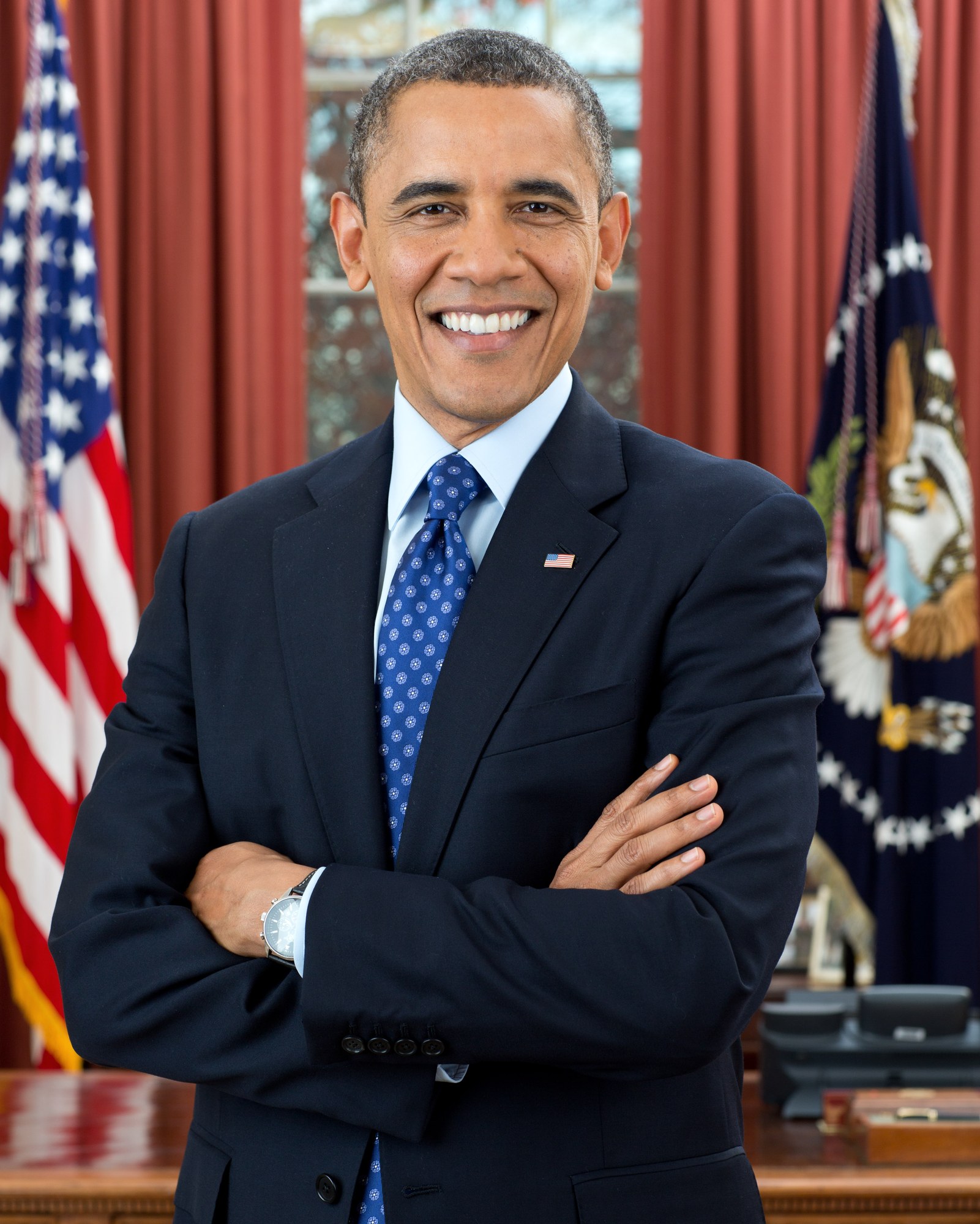
Obama left office in January 2017. In the years since, there have been three presidencies: Trump’s first term, Joe Biden’s term, and Trump’s current term, which began in January 2025. Trump has held the office for six of the past 10 years. The crystallization that prompted this month’s emergency was discovered in March 2026, during Trump’s second term.
That timeline was the core of the criticism that followed Vance’s remarks.
“Gimme a break”
David Axelrod, a former senior adviser to Obama, led the backlash on X:
Author Joyce Carol Oates mocked the administration for reaching further into the past to assign blame:
Political commentator Molly Jong-Fast was likewise struck by how far back the argument reached:
Other journalists and political figures joined the criticism:
The delay from the March discovery to the November detonation was the question Vance had been asked. He said the administration realized about six months ago that it had no good alternative to a blast, and that planning for the site and the weather took time. Other U.S. officials told CBS News that the conclusion that a controlled detonation was the only safe option was reached only about two months ago, after a private contractor looked into disposal methods.
Environmental groups’ lawsuits and the shifting detonation date also accounted for some of the time between March and Wednesday’s blast. Those are events that unfolded this year, not in 2009.
Federal officials have defended the detonation itself as necessary to prevent an uncontrolled explosion, the concern Vance cited and the Army and ATF described in the days before the operation.
The political argument that followed was narrower: whether the vice president was right to place the crisis at Obama’s feet, nearly 10 years after Obama left office and after Trump’s own administrations had years with the stockpile under their watch.
That question, Who had responsibility after 2009, and what happened between March and November? is what critics said Vance had not answered.