
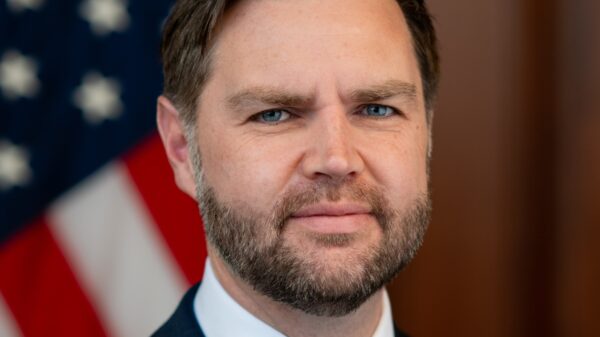
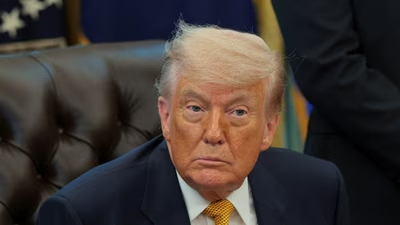


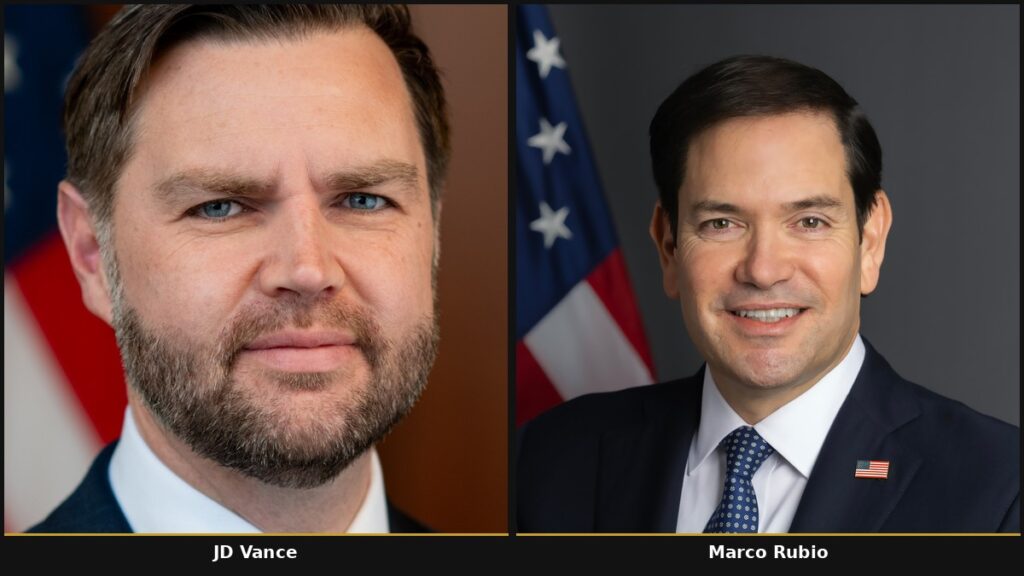
President Donald Trump has grown privately frustrated with Vice President JD Vance over how Vance explained the Republican midterm defeat, while praising Secretary of State Marco Rubio as a possible future presidential candidate, The New York Times reported Wednesday. The account, by Times White House correspondent Tyler Pager, was summarized by Mediaite.
At first, Trump appeared unfazed by Vance’s post-election analysis blaming the Iran war for the party’s losses. “I think it’s largely true,” the president told reporters after Vance posted a lengthy message arguing that the war, and not a messaging dispute, was the reason Republicans lost.
“Over the past two weeks, Mr. Trump has grown increasingly frustrated with how his vice president framed his assessment of what went wrong, complaining to aides and allies that Mr. Vance should have made a point of saying the president made the right decision in going to war with Iran, according to people with knowledge of the president’s comments,” Pager wrote.
Those people, who spoke on the condition of anonymity to describe private conversations, also said Trump has continued to praise Rubio in private and has suggested he could be a strong presidential candidate. Allies have noted that Rubio has repeatedly called the decision to attack Iran essential to U.S. national security. The White House did not respond to a request for comment. Vance’s office declined to comment, pointing to recent interviews.
What Trump says was missing
Trump has hinted at the irritation in public, saying earlier this month that Vance should have “made one other statement.”
“If you had it to do again, would you do it again? The answer is yes,” he said, laying out what he believes was missing from Vance’s analysis.
The vice president has tried to close that gap without retracting his midterm diagnosis. In a Monday interview with Fox News’s Laura Ingraham, asked whether there was any “daylight” between him and the president, Vance said there was “no daylight” and that when the president makes a decision, “he is owed a cabinet that helps implement that decision.” He also said he has not decided whether to run for president in 2028. “I haven’t made a decision. We’ll figure it out sometime next year.”
On Wednesday, Vance canceled a planned appearance at The New York Times DealBook Summit, citing meetings in Washington to address recent tech outages.
The tension, if the Times reporting is accurate, is not about whether the war was politically costly. Trump has already said Vance was “largely” right about that. It is about whether Vance’s public post treated the decision to go to war as justified. In the message he published the day after the midterms, Vance wrote, “The reason we lost is the war. The president himself said so last night. If you’d like to argue it was worth it, that losing the Senate for the next 6 years was worth it, then do so. Argue it was a worthwhile cost to pay. Agree or disagree, that’s at least honest.” He added, “But everyone knows why we lost. And any honest conversation about where we go from here must start there.”
Rubio’s opening, and the 2028 problem
Rubio has been making the argument Trump says he wanted to hear. He has said the president “identified a very real threat” in Iran. That defense, combined with Trump’s private praise and a very public riff in Manila on Tuesday (“How hot is Marco?”), is why the Times story landed as a 2028 story as much as a war story.
It should be kept in proportion. Anonymous descriptions of a president’s mood are not an endorsement, and Trump has wavered publicly and privately on Vance before. Vance still holds the vice presidency, and he has spent the week insisting there is no split. Rubio still holds the State Department, and a dinner-table joke is not a nomination. What the reporting does establish, if the sources are right, is that Trump is keeping score: he wants the war described as both costly and correct, and he has noticed which of his two most visible possible successors says which part.
Allies of Vance, also speaking anonymously, have told the Times he is genuinely undecided about 2028, pointing to his young family (his fourth child was born in July) and to his interest in the data. Some have said a decision to resume major combat operations in Iran would make a Vance campaign much harder. That is a political assessment, not a statement of White House policy. It does help explain why every public comment about the war is being read, in both camps, as a positioning exercise.
The Times report was published Wednesday and described by Mediaite the same afternoon. It relies on unnamed officials and allies. The on-the-record record remains what Trump, Vance, and Rubio have said in public.
There is a policy consequence, too, that sits underneath the succession talk. If Trump wants the war described as the right call, and if he is already frustrated that Vance did not say so clearly enough, then public comments from the vice president and the secretary of state become part of the decision-making climate. Officials taking the next set of military options to the president will know which framing he rewards. That does not mean the Times report will change the war plan on its own. It does mean the political argument about the war is no longer only a midterm autopsy. It is a live test of loyalty inside the administration.
Vance’s Monday interview was an attempt to pass that test without abandoning the midterm point he has already put on the record. He can say there is “no daylight” and still believe, as he wrote last week, that any honest conversation has to start with the war’s cost at the ballot box. Trump can say Vance was “largely” right and still want one more sentence: that he would do it again. Those two statements can coexist in a transcript. The Times reporting suggests they are not coexisting as comfortably in private.
Readers should also remember what this story is not. It is not a formal break, a firing, or an endorsement of Rubio for 2028. It is a report of the president’s private irritation, based on unnamed sources, published in the middle of a week when Trump was already praising Rubio in public and Vance was already insisting the two men were aligned. The facts that can be checked are the public quotes. The private mood is what the Times is adding, and it should be labeled as such.