













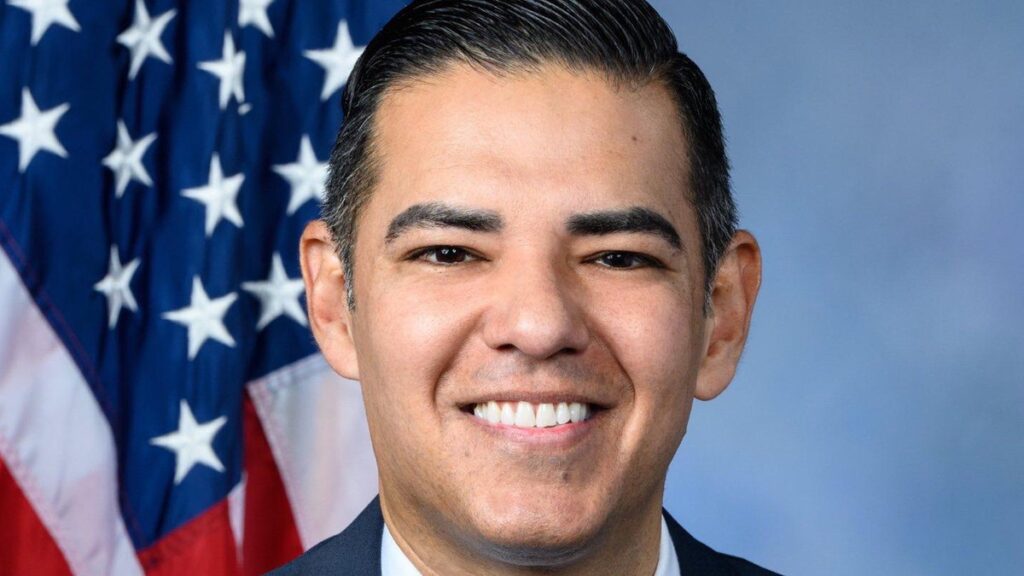
Rep. Robert Garcia of California, the top Democrat on the House Oversight Committee, sent a dozen document-preservation letters Wednesday to President Donald Trump’s relatives, aides, and other officials, an early step toward investigations Democrats say they will launch when they take control of the House in January. The letters were reported by Mediaite and detailed by the Associated Press and the committee itself.
“Oversight Democrats are fighting to put an end to this Administration’s self-dealing, misconduct, and abuse,” Garcia said in a statement. “These investigations will lay the groundwork for legislation which helps all Americans. This is just the beginning.”
The notices demand that recipients preserve records related to alleged financial conflicts involving the Trump family, corporate dealings, conduct at the Department of Homeland Security, and the administration’s handling of the Jeffrey Epstein files. They asked for answers by December. They have no legal force until Democrats are seated in the new Congress in January. Even then, as Politico has noted, congressional subpoenas come with a certain flexibility.
Who got the letters
According to the committee, the 12 notices went to a wide inner circle. Donald Trump Jr. and Eric Trump were told to preserve records related to alleged conflicts of interest and their stakes in World Liberty Financial. Jared Kushner was asked about alleged conflicts tied to Affinity Partners. Kimberly Guilfoyle, the former ambassador to Greece, was named in connection with alleged pay-to-play questions around her posting.
On the Homeland Security side, the list included White House Chief of Staff Stephen Miller, former DHS Secretary Kristi Noem, and former senior adviser Corey Lewandowski, with the committee citing alleged abuses, contracting questions, and Miller’s role in immigration enforcement. On the Epstein files, Garcia wrote to Vice President JD Vance and former chief of staff Susie Wiles about meetings in the White House Situation Room, and to Attorney General Todd Blanche about the Justice Department’s handling of documents and the transfer of Ghislaine Maxwell. Federal prison officials were also notified about that transfer.
The breadth is the point. Garcia is signaling that Democrats intend to treat family business, deportation policy, and the Epstein records as a single oversight agenda rather than as isolated fights. The letters are not findings of wrongdoing. They are preservation demands, issued by a lawmaker who is still the ranking member today and who expects to be chairman in January.
What the letters can and cannot do right now
It is important to be precise about timing. Democrats won the midterms on Nov. 3, but they do not take the gavel until the new Congress convenes. A letter from an incoming chairman can warn people not to destroy records. It cannot, on its own, compel testimony or punish noncompliance before the majority changes hands. Garcia’s December deadline is therefore a political marker more than a court date. Recipients can ignore it, litigate it later, or start gathering files. The legal picture changes only after January, and only if the committee follows through with subpoenas the House is actually prepared to enforce.
The White House has already been at odds with Garcia. After Trump named Miller as chief of staff on Nov. 6, Garcia said Miller “should lawyer up,” a line that drew a sharp response from administration officials who have described Democratic oversight as illegitimate. That argument will be tested in public, and eventually in court, if the new majority issues compulsory process.
Garcia is also promising investigations into the administration’s immigration enforcement, which Democrats have criticized as chaotic and deadly. Those probes, like the Epstein and family-business tracks, will compete for staff time, media attention, and floor hours in a House that will have a new speaker and a long list of campaign promises. The letters are a way to get started before the swearing-in, and to put the named officials on notice that Democrats intend to ask for documents the moment they can.
Whether that notice produces cooperation is another question. Presidential administrations of both parties have resisted congressional demands. Trump’s first term was marked by long fights over witnesses and records. The second term is ending its relationship with a Republican House and preparing to face a Democratic one. Garcia’s stack of letters is the opening bid in that new arrangement, not the last word.
The letters and Garcia’s statement were reported Wednesday by the Associated Press, Mediaite, the House Oversight Democrats, and other outlets.
The list also tells a story about how Democrats plan to frame the next two years. World Liberty Financial and Affinity Partners are business stories. The Situation Room meetings are a records story. ICE and DHS are a use-of-force story. Binding them together in one day of letters allows Garcia to say the committee is not picking a single scandal. It also risks diluting all of them if the committee cannot show progress on any one track.
Incoming chairs often send preservation letters in the weeks after a wave election, for a practical reason: documents disappear, phones get wiped, and staff leave. Whether or not every allegation in these notices is later substantiated, the act of putting 12 names on a public list raises the cost of destroying records. That is the limited, real power Garcia has today. The larger power (subpoenas, depositions, contempt referrals) arrives only if the new majority wants to spend it.
For the people named, the immediate task is legal and political at once. Some, like Wiles and Noem, are already out of their jobs. Others, including Vance, Miller, and Blanche, are still at the center of the administration. A vice president or a sitting attorney general is a harder witness than a former aide. Garcia has started with paper, not with hearing dates, which is the more cautious sequence. The question for January is whether the committee stays on that sequence or moves quickly to televised confrontations.
Garcia’s letters are an opening move, not a verdict. They should be read as a map of Democratic oversight targets, and as a reminder that the midterm result has a practical consequence: the people around the president will be asked, formally, to keep their files.