














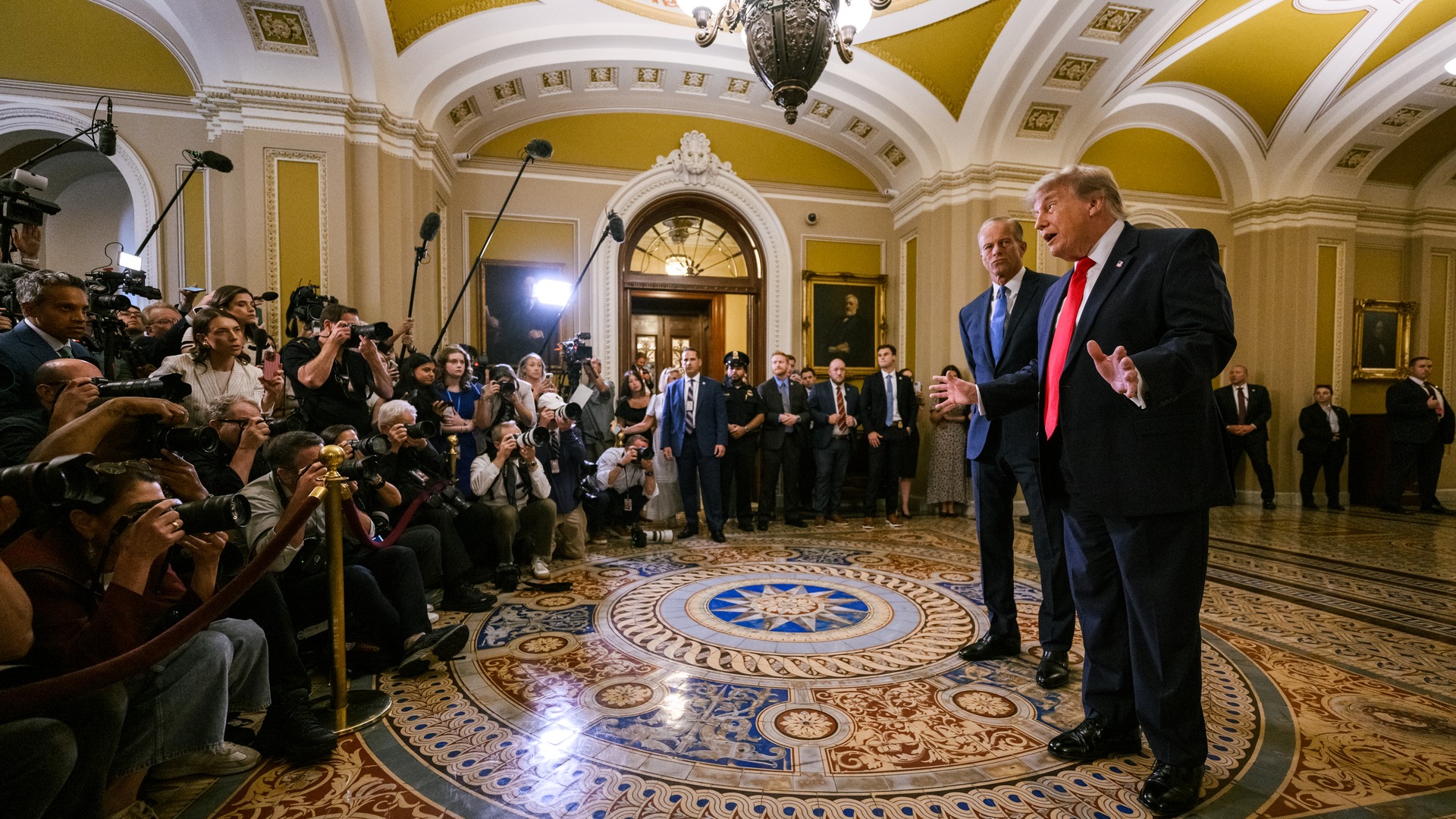

In the 12 days after Democrats won the midterms, Donald Trump’s White House and Justice Department hit the incoming majority with 10 threats for daring to investigate his billionaire donors.
The barrage started on Truth Social, moved through the attorney general’s Sunday show appearance, and landed in formal letters from White House counsel Will Scharf and from Aaron Reitz, the Trump-appointed U.S. attorney in Houston, who posted the letters on X as he sent them. Acting Deputy Attorney General Trent McCotter piled on in a public reply. The statutes Reitz cited, 18 U.S.C. sections 241 and 242, are criminal civil rights laws that can carry prison time.
Democrats say the campaign is designed to do one thing: scare Congress off the money. There is a lot of it. The Guardian reported that Elon Musk spent almost $300 million backing Trump in 2024 and about $450 million in the midterms, and that Musk’s companies collected $6 billion in federal contracts while he ran the Department of Government Efficiency and another $10 billion after he left. Trump’s own fortune has risen $2.7 billion since 2024, according to Forbes figures cited by the Guardian, including more than $1.4 billion from crypto ventures in 2025. The Washington Post separately found about $333 million in private gifts and pledges for Trump’s White House ballroom, including $25 million each from Nvidia and Apple.
Here is every verified threat, in order.
1. Nov. 7: Trump Orders the Justice Department to Investigate Democrats
On Saturday, Nov. 7, Trump went on Truth Social and accused Democrats of “extortion at the highest level” for promising oversight of administration officials and donors. “The imprisonment should be against these EXTORTIONISTS,” he wrote, according to Politico. Then he gave the Justice Department an order: “By copy of this statement, I am ordering the Department of Justice to look into this criminal act, immediately!”
2. The Follow-Up: “These SLEAZEBAGS Should Go to Jail”
In a second Truth Social post that weekend, Trump escalated from a Justice Department inquiry to jail time. “These SLEAZEBAGS should go to jail for what they are doing,” he wrote, CBS News reported. Politico later wrote that White House counsel Will Scharf amplified Trump’s call to “jail” congressional investigators.
3. Nov. 8: The Attorney General Will Not Rule Out Prosecution
The next morning, Attorney General Todd Blanche appeared on CNN’s State of the Union and would not rule out investigating Democrats over their oversight rhetoric. “There could be,” Blanche said when asked whether the administration would counterinvestigate members of Congress. He pointed to comments aimed at people considering Trump administration jobs and said, “When the threats become so vile and so dangerous that you are telling people in college that they better be careful if they want to work in the Trump administration because somebody will come after them, at some point you have to draw the line.” He added, “I would be very worried if I was a member on that committee.”
Rep. Robert Garcia, the California Democrat set to chair the House Oversight Committee, called the appearance what it was. “What Todd Blanche is doing right now is a threat,” Garcia said on CNN. “He’s trying to stop us from doing real oversight.”
4. Nov. 9: White House Counsel Accuses Democrats of “Blatant Criminality”
Scharf dated a letter to Garcia on Monday, Nov. 9. It became public around Nov. 11. NBC News and the Associated Press reported the key line: “threats to executive branch officials designed to deter them from public service, or process designed merely to abuse or instill fear in the recipient may cross the line into blatant criminality.” Scharf also wrote that “issuing unlawful subpoenas with the intention of depriving citizens of their constitutional rights and privileges may warrant further investigation.”
Garcia was not moved. “It appears Donald Trump has something to hide,” he said. “Let’s be clear: Congress’ authority comes from Article I of the Constitution, not from the permission of the White House.” He added, “We are a co-equal branch of government and will not be deterred by baseless threats from a weaponized DOJ or from the President’s lawyers.” Likely House Speaker Hakeem Jeffries called the letter “outrageous,” telling reporters, “It’s factually inaccurate. It’s legally inaccurate, and it’s inaccurate in terms of the Constitution.” A Democratic Congress, he said, would be “a check and balance on an out-of-control executive branch,” and “if they don’t like it, consult the Constitution.” White House spokesperson Lauren Bis told Politico the Scharf letter was “not a threat.”
Legal experts were not impressed. Molly Nixon, a senior fellow in executive power at the libertarian Cato Institute, told CBS News, “I think it’s incredibly unlikely that any court would find merit in any criminal charge against a member of Congress for their vote on issuing a subpoena.” If a subpoena lacks a valid purpose, she said, “That might just mean the subpoena doesn’t get enforced or that it’s quashed.”
5. Nov. 11: A Texas Prosecutor Demands Sen. Blumenthal’s Files
On Wednesday, Nov. 11, Reitz sent Sen. Richard Blumenthal, the Connecticut Democrat slated to run the Permanent Subcommittee on Investigations, a letter demanding that he preserve documents from his inquiry into White House ballroom donors. NBC News reported that Reitz accused the senator of threatening “citizens for associating themselves with the President and other public officials,” cited sections 241 and 242, and warned of “significant legal consequences” if Blumenthal did not comply by Nov. 18. Reitz posted the letter on X the same day.
Reitz’s theory is heavily disputed. Sections 241 and 242 require proof of a specific intent to deprive someone of a federal right, and the Constitution’s Speech or Debate Clause shields lawmakers for legislative work, including investigations. “The Constitution’s Speech or Debate clause bars prosecutors from probing the motivations underlying a legislative act. Accordingly, Reitz’s letter is on shaky legal footing,” Cato’s Nixon told TIME. Georgetown law professor Steve Vladeck, quoted in Reason’s Nov. 23 analysis, was blunter: “There’s no federal right to immunity from congressional oversight.”
6. The Same Day: The Acting Deputy Attorney General Backs the Threat on X
McCotter, the acting deputy attorney general, replied within an hour with a public warning from Justice Department leadership.
Blumenthal said he would not be intimidated. He sent Reitz his own preservation demand, seeking records of who decided to draft and post the letter, and accused the administration of “weaponizing the Department of Justice to baselessly target Congress in direct violation of the Constitution.”
7. Nov. 12: The Letter to Sen. Elissa Slotkin
The next day, Reitz sent a similar preservation letter to Sen. Elissa Slotkin of Michigan. Politico reported that he followed the Blumenthal letter with a “similar letter” on Thursday, citing her Oct. 19 remarks about a “deterrence message” to people considering Trump administration jobs, again invoking sections 241 and 242, with a Nov. 19 deadline. Then he posted it.
That same Thursday, Blanche tried to hose it down at a press conference. “There’s no ongoing criminal investigations into words that incoming senators or congressmen have said,” he said, according to CBS News. The walk-back did not stop the letters.
8. Nov. 15: The Letter to Sen. Elizabeth Warren
On Sunday, Nov. 15, Reitz posted a letter to Sen. Elizabeth Warren. NBC News reported that he accused her of being “eager to wield your future gavel like a tomahawk, hunting for the scalps of President Trump’s private associates,” language that leaned on a Native American stereotype Trump has used against her for years. The letter pointed to a Nov. 11 inquiry Warren, Blumenthal, and Garcia sent about ballroom fundraising, and to Warren’s public comments that Trump allies should “better get ready for some investigations, serious ones.” Trump reposted the letter on Truth Social.
9. Nov. 16: The Letter to Rep. Robert Garcia, and a “Preliminary Inquiry”
On Monday, Nov. 16, Reitz sent Garcia a letter of his own and announced, in the same post, that “My preliminary inquiry begins.” He told NBC News he was “looking at” the rhetoric of other incoming Democrats, was in “constant contact” with Justice Department leadership, and was conducting a “preliminary investigation” into speech, while claiming he was “not interested in chilling free speech.” In a later CBS Texas interview, he said he had opened a preliminary inquiry under sections 241 and 242 because “we have reason to believe, although we are not yet alleging” a crime.
Critics also asked what a prosecutor in South Texas is doing policing lawmakers in Washington. Reason’s Jacob Sullum, citing the Washington Post, noted Reitz has no obvious jurisdiction over members more than 1,000 miles away, and called the administration’s rationales “vague to highly implausible.” Texas A&M law professor Jenny Carroll told TIME the letters never spell out “the elements of these U.S. code sections that you actually think are violated.”
10. Nov. 18: The Letter to Sen. Adam Schiff
On Wednesday, Nov. 18, Reitz posted a letter to Sen. Adam Schiff of California, Politico confirmed, bringing the named formal recipients of his letters to five: Blumenthal, Slotkin, Warren, Garcia, and Schiff. In the post, Reitz accused Schiff of having “vindictively threatened private Americans with congressional punishment for associating with President Trump” and said he “seems bloodthirsty to weaponize Congress starting in January.”
Slotkin answered the same week with a letter of her own. She told Reitz that political speech is protected by the First Amendment, that oversight is a constitutional duty, and that the Speech or Debate Clause covers members of Congress. “Your threat of investigation is baseless, and you should withdraw your letter immediately,” she wrote, according to NBC News. She also noted that he had posted the letter on X rather than serving it on her or on Senate counsel, and she called the effort a “sham investigation.”
The Point Was Never Subtle
Legal specialists have been blunt about the criminal theory. Molly Nixon of the Cato Institute told CBS News it is “incredibly unlikely that any court would find merit in any criminal charge against a member of Congress for their vote on issuing a subpoena,” given the Speech or Debate Clause. Reitz, a former chief of staff to Sen. Ted Cruz, has still pressed ahead. The watchdog Campaign for Accountability has filed a Texas bar complaint over the letters. Rep. Jamie Raskin, speaking to the Guardian about the broader campaign, said, “The president’s lawyers can spare us the crackpot heckling about congressional revenge.”
The five named Reitz letters, plus Trump’s two weekend posts, Blanche’s televised warning, Scharf’s letter, and McCotter’s public backing, are the 10 threats documented here, from Nov. 7 to Nov. 18. A later Politico report put Reitz’s letters at seven Democratic lawmakers.
The sequence is the story. Democrats said they would follow the money around Trump’s donors, contractors, and ballroom benefactors. In 12 days, the White House and the Justice Department told them that doing so might be a crime.