





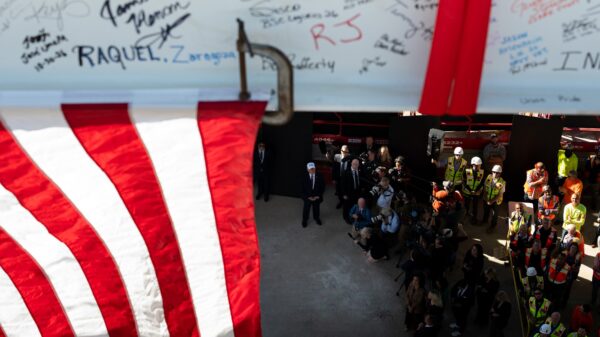

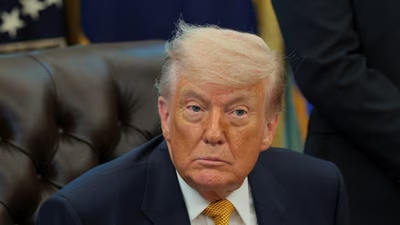


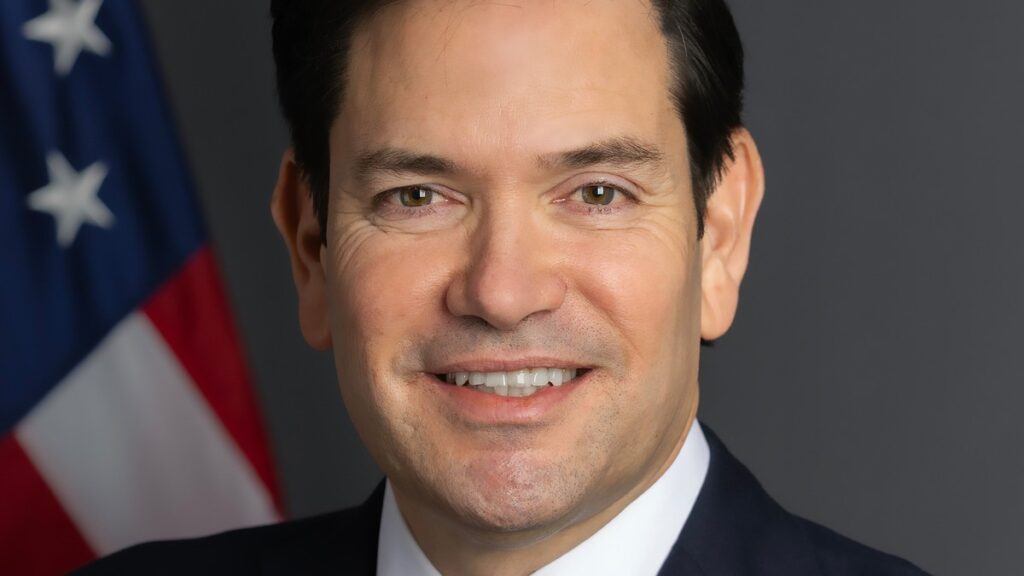
President Donald Trump paused a scripted appearance at a U.S.-ASEAN gathering in Manila to praise Secretary of State Marco Rubio, asking the room, “How hot is Marco?” The remarks, delivered as Trump thanked what he called his “great team,” were reported Tuesday by Mediaite and captured on an official White House video of the dinner.
Trump told the leaders that the United States had “never been closer” to its partners in the region “because of our personal relationship.” He said they should call Rubio, or others on the team, if there is a problem, and then offered a joke at his secretary of state’s expense.
“You’ll call Marco, you’ll call others and if they don’t respond, call me. I’ll take your call. I’ll say ‘Marco, you’re fired, you didn’t respond fast enough.’ How hot is Marco, right? Is Marco doing a great job? He’s been fantastic,” Trump said.
He also named Treasury Secretary Scott Bessent, Commerce Secretary Howard Lutnick, and U.S. Trade Representative Jamieson Greer, thanking them and saying, “the trade has been amazing. We’re setting every record.”
A sales pitch, a roast, and a seating chart
The rest of the remarks wandered in the same register. Trump told the room that Southeast Asia and the Indo-Pacific are “one of the world’s most vibrant and productive regions” and that “it’s really so much better when you know people.” He said he knew “almost all the people at the table,” then added, “You know, the good ones, some bad ones, got some bad ones, too, but you know the people you want to do business with and it goes so much better and so fast.”
He closed by thanking Philippine President Ferdinand Marcos Jr., saying he had just met Marcos’s son, “a beautiful young man, he’s got a great future,” and telling the family they had “done a very good job.”
The trip itself was a late arrival to a summit that had, in reporting by the Associated Press and others, already been winding down. The most concrete early deliverable cited by regional officials was a set of principles and a work plan on combating online scams, along with talk of minerals, energy, and defense cooperation. Trump’s dinner remarks were not a policy paper. They were a performance: flattery for Rubio, a reminder that the president takes the call, and a claim that personal relationships explain the trade numbers he likes to cite.
Why the Rubio line landed
Rubio has been one of the administration’s most visible defenders of the decision to go to war with Iran, a contrast with Vice President JD Vance’s sharper comments about the political cost of the conflict. Allies of the president have, in other reporting, described Trump praising Rubio in private as a possible future presidential candidate. A public riff in Manila (“How hot is Marco?” followed by a fake firing joke) does not prove those private conversations. It does show Trump using a regional summit to advertise the secretary of state as the man foreign leaders should call, and as someone the president is happy to tease in front of them.
The “you’re fired” line is a Trump trademark, not a personnel announcement. Nothing in the speech indicated Rubio was actually in trouble. Bessent, Lutnick, and Greer were listed in the same breath as part of a “great team.” The more useful signal, for diplomats in the room, was the part about access: if the cabinet does not pick up, Trump said, he will.
Whether that is a reassuring offer or a confusing chain of command depends on the listener. For a president who often treats foreign policy as a set of personal relationships, it is consistent. For a State Department trying to present a single channel, it is messier. The official video, posted by the White House, is the original record of what he said, and it is the clip embedded above (not a third-party recap or a cable ad player).
The United States has spent months trying to hold together a coalition of partners around the Iran war, trade talks, and regional security. A dinner toast will not settle those files. It does, however, tell foreign capitals how this White House wants to be approached: through the people at the table, and, if that fails, through the president himself.
Trump’s remarks were reported Tuesday by Mediaite and other outlets covering the Manila meetings. The full video is from the official White House YouTube channel.
The timing of the remarks also matters in Washington. Rubio has spent the weeks since the midterms as one of the administration’s most consistent public defenders of the Iran war, even as other Republicans have argued that the conflict helped sink the party’s majorities. Trump’s decision to single him out in front of foreign leaders, and to do it in a joking, familiar register, is a form of public protection. It tells the room (and the clip that will travel back home) that Rubio is in favor, at least today.
It is also a reminder of how this president uses official events. The ASEAN dinner was billed as a chance to talk about trade, scams, and regional ties. Trump used it to inventory his cabinet, compliment a host family, and advertise a personal hotline. Those are not mutually exclusive goals, but they are not the same goal. Diplomats who came for a communique got a monologue. Viewers who watch the official video will see both the scripted praise for the region and the unscripted roast of the secretary of state.
None of that makes the “you’re fired” line a real threat, and it would be a mistake to read a dinner joke as a staff shake-up. It would also be a mistake to ignore the image Trump chose to project: Rubio as the handsome, indispensable envoy, the rest of the economic team as a supporting cast, and the president as the man who still answers the phone.