













A federal prosecutor accused Sen. Elizabeth Warren of going on the “warpath” and “seeking the scalps” of President Donald Trump’s allies, in a letter packed with Native American stereotypes, as Democrats prepare to investigate the administration after their midterm victories. Mediaite reported the letter Monday, following Sunday coverage in Politico and other outlets.
Aaron Reitz, the U.S. attorney for the Southern District of Texas and a former chief of staff to Sen. Ted Cruz, warned Warren against using her expected gavel at the Senate Banking Committee “like a tomahawk, hunting for the scalps of President Trump’s private associates.” He wrote that “the context sends a strong smoke signal: you intend to target private individuals close to President Trump.”
Reitz posted about the letter on X on Sunday, repeating the same imagery.
“@SenWarren is on the warpath to wield her committee gavel like a tomahawk, seeking the scalps of those who associate ‘too closely’ with President Trump,” he wrote. “Congressional investigations can’t be used to punish Americans for exercising their 1A rights. My first arrow shot.”
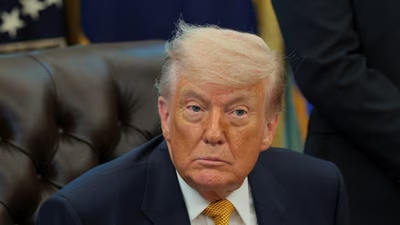
Trump amplified the warning by reposting Reitz’s letter on Truth Social on Sunday. The language (“scalps,” “warpath,” “tomahawk,” “smoke signal,” “war cries,” and “arrow”) was widely read as a jab at Warren’s past claims of Native American ancestry, which Trump has mocked for years.
The letter that set this off
Reitz pointed to a Nov. 11 request from Warren, Sen. Richard Blumenthal of Connecticut, and Rep. Robert Garcia of California asking Trump fundraiser Meredith O’Rourke to preserve records about financing for the president’s White House ballroom and other projects. That request, first reported by The Wall Street Journal, warned that O’Rourke’s fundraising “reeks of potential corruption” and sought lists of the companies she approached, the results, her compensation, and her role in meetings with executives.
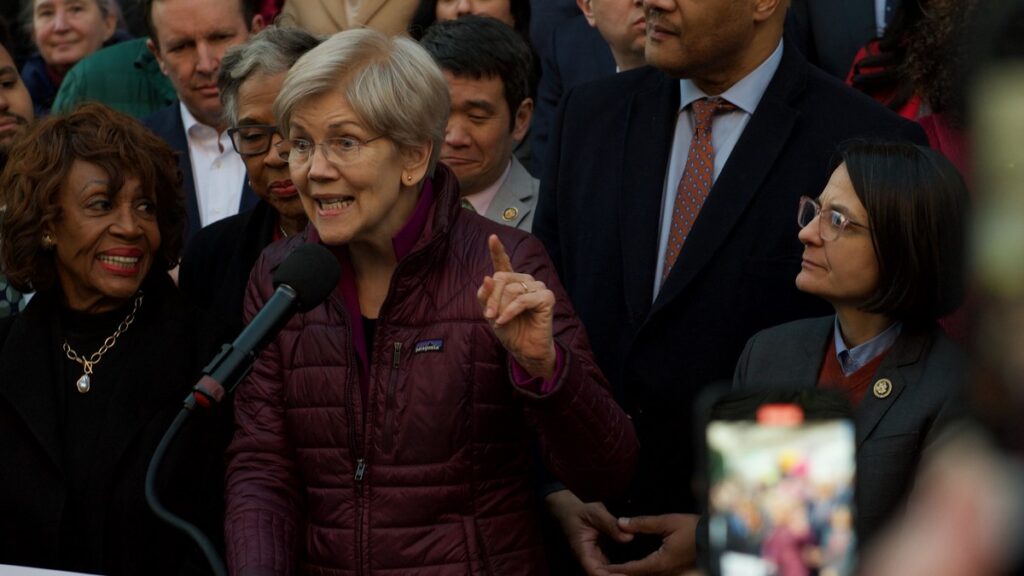
Reitz accused the lawmakers of “demanding sweeping information about her and other private citizens and entities who associate with President Trump.” He also cited Warren’s recent comments on CBS’s “Face the Nation,” in which she said technology executives, Wall Street figures, and major corporations found to have broken the law “better get ready for some investigations, serious ones.”
Similar document-preservation demands, Mediaite and other outlets reported, have gone from Reitz to Blumenthal and to Sen. Elissa Slotkin of Michigan, raising the prospect of a running conflict between incoming congressional investigators and a Trump-appointed U.S. attorney.
Oversight, the First Amendment, and a loaded vocabulary
Reitz is making a legal argument and a political one at the same time. The legal claim is that Congress may not use investigations to punish people for associating with the president, a right he ties to the First Amendment. Congressional oversight of official dealing, fundraising for presidential projects, and possible conflicts of interest is, however, a core function of the legislative branch, and courts have long given committees wide latitude to issue subpoenas once a new Congress is seated. A preservation letter in mid-November, before Democrats take control in January, is not itself a subpoena.
The political message is cruder. By dressing the warning in “tomahawk” and “scalps” language, Reitz framed a routine separation-of-powers fight as a personal attack on Warren. Critics called the wording racist and unserious for a sitting U.S. attorney. Supporters heard a prosecutor telling an incoming chair not to run a revenge operation against private citizens. Both readings were intended by the choice of words.
Warren has not, in the reporting available Monday, been accused in Reitz’s letter of a crime. She and her colleagues asked a fundraiser to keep records. Reitz has said he has not assigned formal criminal investigations arising from those letters, according to later accounts of his outreach to other Democrats. The practical effect is a shot across the bow: if Banking or Oversight Democrats come after Trump’s donors, they may find a sitting U.S. attorney already on the record describing that work as a hunt for “scalps.”
What happens next
Democrats will still get their gavels in January. They can issue subpoenas then, and they can ignore a letter from a Texas U.S. attorney if they choose. Reitz, for his part, can try to open cases or send more warnings, but he does not control the House or Senate calendars. The more immediate question is whether this exchange becomes the template for the next two years: prosecutors in the administration telling incoming chairs that oversight of the president’s associates is illegitimate, and Democrats treating those warnings as evidence that the Justice Department will be used to shield the president’s friends.
The O’Rourke records request remains the concrete dispute underneath the rhetoric. It concerns more than $800 million in corporate donations to presidential projects, including the ballroom, and a claim, which the White House has denied, that the operation raises quid pro quo questions. Reitz’s letter does not resolve that claim. It tries to change the subject to Warren’s motives and to her past, in language chosen for maximum sting.
The letter and the X post were reported Sunday and Monday by Politico, Mediaite, and other national outlets. Trump’s decision to share the letter put the Justice Department’s posture toward the next Congress on the record, in the president’s own feed.
A U.S. attorney as a political messenger
It is not unheard of for administration lawyers to warn Congress about the limits of oversight. It is unusual for a sitting U.S. attorney to do so in a public letter that leans so hard on ethnic caricature, then to post it as “my first arrow shot.” Reitz is a political appointee with a previous life as a Senate chief of staff. That does not make his First Amendment argument automatically wrong. It does mean the letter should be read as part of a coordinated pushback, including the president’s decision to share it, rather than as a routine prosecutorial memo that happened to leak.
Warren, Blumenthal, and Garcia can still ask for the O’Rourke records. They can also choose to treat Reitz’s letter as a reason to look at whether Justice Department officials are trying to deter lawful oversight. Those are separate inquiries. The risk for Democrats is overreaching into a hunt that looks personal. The risk for the administration is looking as if it has told a senior prosecutor to talk to senators the way a campaign talks on social media. Monday’s coverage, from Politico to Mediaite, shows that both risks are already in public view.